 020 3950 5234
 info@rllaw.co.uk
Unfair Dismissal Reform: Shorter Service Requirement and Removal of Compensation Cap

Significant reforms to unfair dismissal are set to take effect from 1 January 2027, bringing two major changes: a reduction in the qualifying service period to six months, and the complete removal of the compensation cap. Together, these changes will materially increase risk for employers and expand access to claims for employees.
Currently, employees generally need two years’ service to bring an unfair dismissal claim. Reducing this qualifying period to six months will widen eligibility considerably. In practical terms, employees who start work on or after 1 July 2026, will reach six months’ service by 1 January 2027, placing them within scope of the new regime almost immediately after the rules come into force. This creates a clear shift – employees will gain protection much earlier in their employment lifecycle.
At the same time, the removal of the compensation cap means that awards will no longer be limited by statutory ceilings. Claimants will instead be able to recover their actual financial losses, subject to ordinary principles such as mitigation. This change is particularly important for higher earners, whose losses can quickly exceed the current cap. For employers, this introduces the possibility of substantially larger awards, especially where an employee remains out of work for a longer period.
From an employer’s perspective, these reforms combine to create a more challenging environment. A larger group of employees will be eligible to bring claims, and the financial consequences of getting a dismissal wrong will be greater. Decisions taken within the first year of employment, previously viewed as relatively low risk, will now require much closer scrutiny.
Employers should act early and prepare accordingly. Key steps include strengthening onboarding and probation processes, ensuring performance concerns are identified and addressed promptly, and applying fair and consistent procedures even at an early stage of employment. Documentation will be critical, as will the ability to demonstrate a clear and reasonable basis for dismissal decisions.
In addition, employers may wish to review their approach to settlements and internal dispute resolution, given the increased potential value of claims. Training for managers will also be essential to reduce risk in day-to-day decision-making as failures in handling workplace issues may now expose employers to significantly greater financial and legal liability.
These reforms mark a decisive shift towards greater employee protection and higher employer exposure. Early preparation will be key to managing the impact.
For further information or to discuss a potential employment law or discrimination claim, please contact our specialist employment solicitors on 0207 3950 5234 or info@rllaw.co.uk. We are ranked as a ‘Leading Firm’ in the Legal 500 and Chambers and Partners independent guides to the UK Legal Profession.
News
 Oct/2/2026
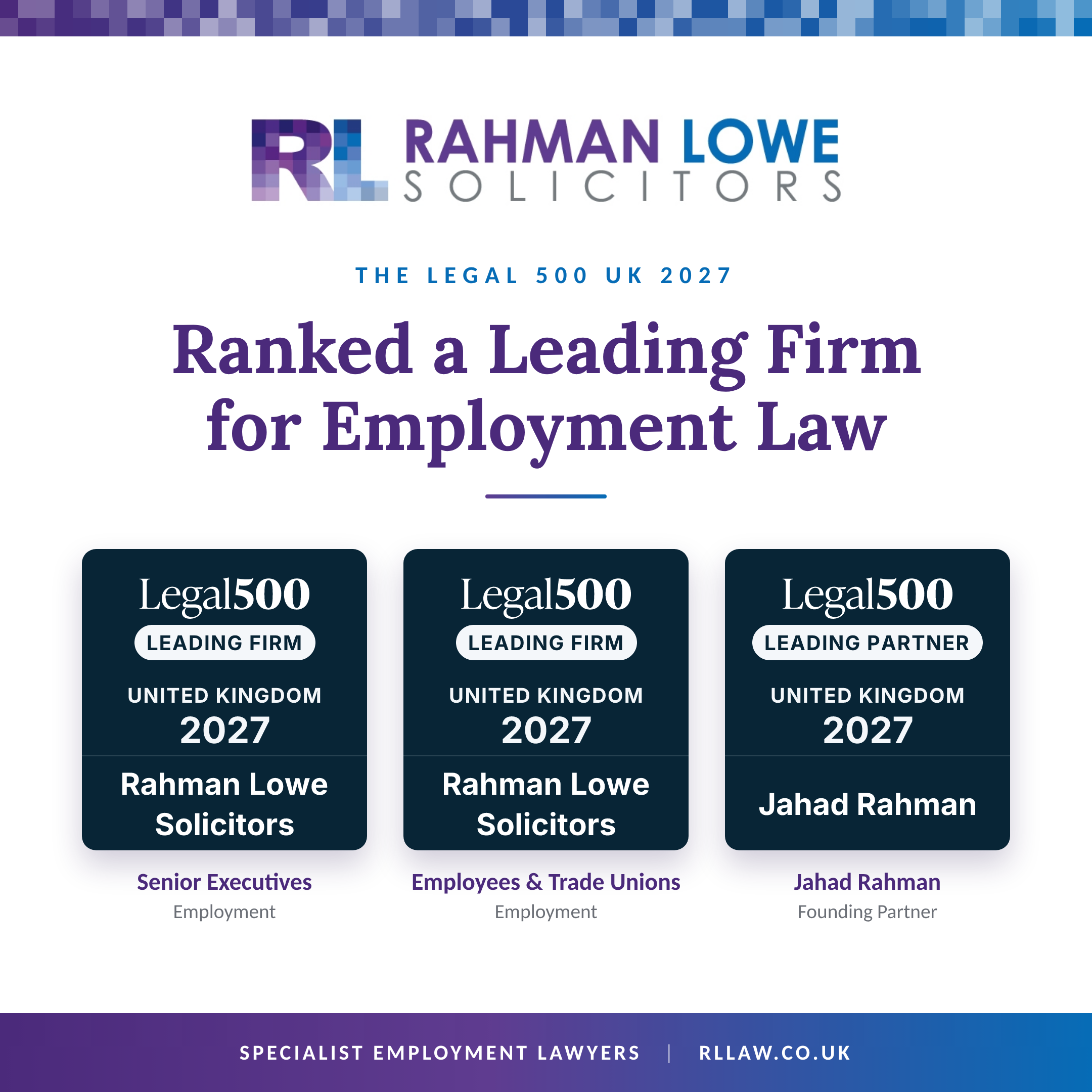
Rahman Lowe ranked as Leading Firm for Employment Law in Legal 500 UK 2027
 Aug/4/2026
Rahman Lowe Secures Landmark Victory In Anti-Zionist belief Discrimination Claim on behalf of Dr David Miller
 Jul/14/2026
Rahman Lowe Solicitors secure apologies and substantial damages for Nadia Sawalha and Mark Adderley following defamatory articles by the Daily Mail and Metro
 May/29/2026
EAT Judgment of Clifton Diocese v Parker
