 020 3950 5234
 info@rllaw.co.uk
Sexual Harassment as a Protected Disclosure: A Significant Expansion of Whistleblowing Protection

From 6 April 2026, sexual harassment has been expressly added to the list of qualifying disclosures under section 43B of the Employment Rights Act 1996. This marks a significant development in whistleblowing law and removes a long‑standing ambiguity that required workers to frame sexual harassment complaints as a “breach of legal obligation” in order to attract protection.
Under the amended legislation, a worker who reasonably believes that sexual harassment has occurred, is occurring, or is likely to occur, and that their disclosure is made in the public interest, may now benefit from f whistleblowing protections. These include protection from detriment and automatic unfair dismissal with no qualifying service requirement and uncapped compensation.
Sexual harassment complaints may now give rise to dual liability: a claim under the Equality Act 2010 and a parallel whistleblowing claim. In dismissal cases, this may also open the door to applications for interim relief, a powerful and often underestimated remedy.
That said, in practice, when dealing with a dismissal, many Claimants may still find it easier to pursue a victimisation claim linked to any complaint about sexual harassment rather than a standalone whistleblowing claim. Whistleblowing automatic unfair dismissal claims require the claimant to establish that the protected disclosure was the sole or principal reason for the dismissal, a high evidential threshold. In addition, if a finding of victimisation is made, a Claimant would be entitled to injury to feelings, whereas this is not applicable where a finding of automatic unfair dismissal for whistleblowing is made. In reality, a Clamant is likely to pursue a claim under both heads to protect their position.
The reform should therefore prompt employers to reassess not only their whistleblowing policies, but also how sexual harassment complaints are investigated, escalated and managed at every stage.
For further information or to discuss a potential employment law or discrimination claim, please contact our specialist employment solicitors on 0207 3950 5234 or info@rllaw.co.uk. We are ranked as a ‘Leading Firm’ in the Legal 500 and Chambers and Partners independent guides to the UK Legal Profession.
30 April 2026
News
 Oct/2/2026
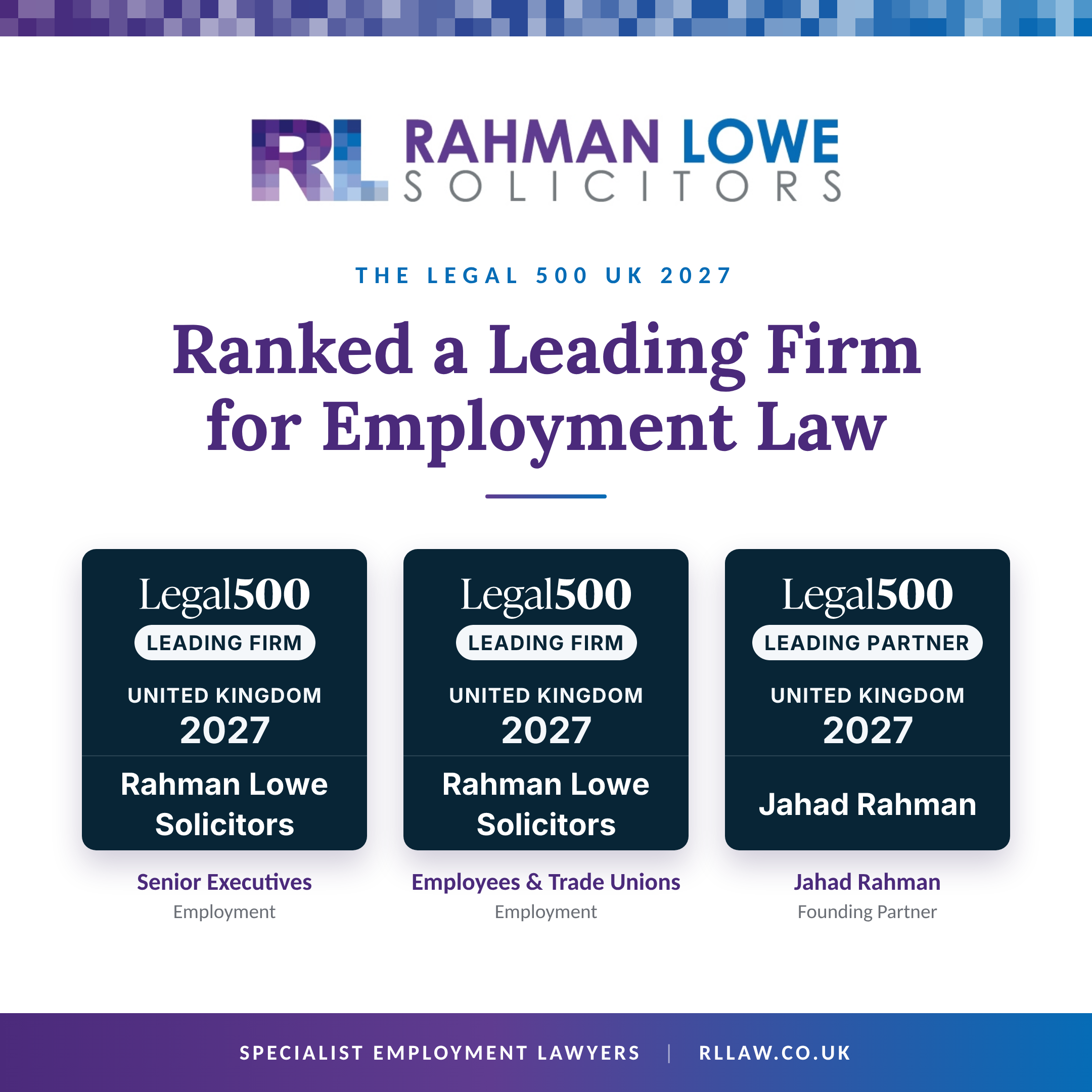
Rahman Lowe ranked as Leading Firm for Employment Law in Legal 500 UK 2027
 Aug/4/2026
Rahman Lowe Secures Landmark Victory In Anti-Zionist belief Discrimination Claim on behalf of Dr David Miller
 Jul/14/2026
Rahman Lowe Solicitors secure apologies and substantial damages for Nadia Sawalha and Mark Adderley following defamatory articles by the Daily Mail and Metro
 May/29/2026
EAT Judgment of Clifton Diocese v Parker
